Monday, 27 December 2010

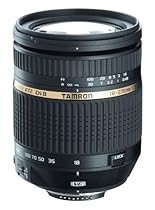
Tamron AF 18-270mm f/3.5-6.3 Di II VC LD Aspherical IF Macro Zoom Lens for Canon Digital SLR Cameras

With the advent of the latest 15X zoom lens from Tamron the pioneer of high power zoom lenses the high power zoom lens has steadily evolved from a 7.1X to a 10.7X to a 13.9X and now to the world's largest zoom ratio of 15X by combining advanced high power zoom design technologies accumulated by Tamron since 1992. The lens covers an angle of view equivalent to that of a 28mm wideangle to a 419mm ultra telephoto with just one lens letting the user capture once-in-the-lifetime images of panoramic landscape images or close-up pictures of children smiling without having to get too close to the subject and without having to change lenses.

  • AF 18-270mm f/3.5-6.3 Di II VC (Vibration Compensation) Tamron zoom lens

  • Built-in vibration compensation for blur-free photos

  • Low-dispersion glass and hybrid aspherical glass elements for superior image quality

  • Optical zoom ratio: 15x (approximately)

  • Minimum focus distance: 19.3 inches


More detail ...

Friday, 24 December 2010

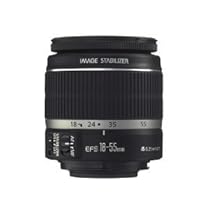
Canon EF-S 18-55mm f/3.5-5.6 IS SLR Lens

Equipped with Canon's Optical Image Stabilizer (IS) technology the Canon EF-S 18-55mm standard zoom lens is ideal for just about any application. IS technology compensates for camera shake by providing the equivalent effect of a shutter speed up to four stops faster. This allows you to take sharp handheld shots even in low-light conditions--a must for sports and nature photography. The lens also offers an aspherical lens element that corrects for aberration thus producing a topnotch image throughout the zoom range and a circular aperture that exquisitely renders out-of-focus backgrounds. Despite its minimal size weight and cost the lens expands the picture-taking possibilities any time slow shutter speeds are needed.

  • Focal Length & Maximum Aperture - 18-55mm f/3.5-5.6

  • Lens Construction - 16 elements in 12 groups including UD-glass and aspherical lenses

  • Diagonal Angle of View - 74 20' - 7 50' (with APS-C image sensors)

  • Focus Adjustment - Gear-driven

  • Closest Focusing Distance - 1.48 ft./0.45m (maximum close-up magnification 0.24x)


More detail ...

Monday, 20 December 2010

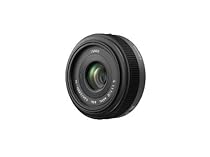
Panasonic LUMIX G 20mm f/1.7 Aspherical Pancake Lens for Micro Four Thirds Interchangeable Lens Cameras

Panasonic LUMIX G 20mm f/1.7 Aspherical Pancake Lens for Micro Four Thirds Interchangeable Lens Cameras

  • 20mm focal length; equivalent to 40mm on a 35mm film camera

  • Compact and lightweight "pancake" lens

  • F1.7 brightness for beautiful soft focus

  • Comprised of seven lenses arranged in five groups; uses two aspherical lenses to effectively minimize distortion

  • Used with Lumix G Micro System Cameras allows for use of the advanced contrast Auto Focus (AF) system


More detail ...

Sunday, 19 December 2010

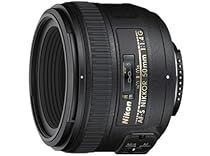
Nikon 50mm f/1.4G SIC SW Prime Nikkor Lens for Nikon Digital SLR Cameras

Nikon 50mm f/1.4G SIC SW Prime Nikkor Lens for Nikon Digital SLR Cameras

  • Normal angle of view on FX-format cameras - Classic normal angle of view when used on a Nikon FX-format digital SLR or 35mm film camera

  • An ideal portrait lens when used on a Nikon DX-format digital SLR approximating the angle of view similar to that of a 75mm lens

  • Nikon Super Integrated Coating (SIC) enhances light transmission efficiency and offers superior color consistency and reduced flare

  • Exclusive Nikon Silent Wave Motor (SWM) enables fast accurate and quiet autofocus

  • Close focusing to 1.5 feet


More detail ...

Tuesday, 14 December 2010

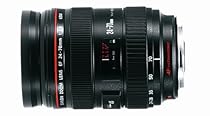
Canon EF 24-70mm f/2.8L USM Standard Zoom Lens for Canon SLR Cameras

This new lens does what many pros thought couldn't be done - replace the previous L-series 28-70 f/2.8 lens with something even better. Extended coverage to an ultra-wide-angle 24mm makes it ideal for digital as well as film shooters and the optics are even better than before with two Aspherical elements and a totally new UD glass element. It's now sealed and gasketed against dust and moisture and a new processing unit makes the AF faster than ever.

Sample Image

MTF Charts


  • EF mount; standard zoom lens; Comes with Lens Cap E77U Rear Lens Cap Lens Hood EW-83F Soft Lens Case 1219.

  • Ultra-low Dispersion glass with Fluorite elements; inner focusing ring; full-time manual focus; aspherical lens

  • 24-70mm focal length

  • f/2.8 constant maximum aperture

  • UltraSonic Motor (USM) AF actuator


More detail ...

Friday, 8 October 2010

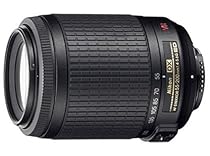
Nikon 55-200mm f/4-5.6G ED IF AF-S DX VR [Vibration Reduction] Zoom Nikkor Lens

NIKON 55-200MM F4-5.6G VR (2166)

  • 55-200mm zoon Nikkor lens with f/4-5.6 maximum aperture for Nikon digital SLR cameras

  • 2 extra-low-dispersion (ED) glass elements for minimized chromatic aberration and superior optics

  • Super-integrated coating minimizes ghosting and flare for more vivid images in dim lighting

  • Silent Wave Motor produces quick and quiet high-speed autofocusing; weighs 9 ounces

  • Measures 2.7 inches in diameter and 3.1 inches long; 5-year warranty


More detail ...

Tuesday, 5 October 2010

Nikon 35mm f/1.8G AF-S DX Lens for Nikon Digital SLR Cameras


Great for low light great focal length for DX and autofocus will also work with D40 D40x D60 and D5000 cameras5

This Nikon 35mm f/1.8G AF-S DX lens produces sharp pictures and great color and contrast. It is also perfect for portrait and other general purposes (semi-macro etc). This lens also produces nice bokeh. The picture quality and bokeh quality are comparable with the other Nikon prime lenses (50mm f/1.8 50mm f/1.4 50mm f/1.4 AF-S etc) lens which are famous for being sharp. Overall this is a very versatile lens. On a non full frame DSLR (such as D40 D40x D60 D5000 D80 D90 D200 D300 etc) this 35mm focal length is equivalent to about 50mm which is considered a normal lens (normal as to being close to a person eye viewing angle perspective).


Many of us including those who already own the 50mm prime have been waiting for this lens (prime lens that has wider angle than the 50mm) for a long time especially for non full frame DSLR owners that usually have about 1.5x magnification due to the smaller sensor size. Those 50mm lens on a non full frame DSLR is equivalent to 75mm which is often too much zoom for many situation. For example in a room where you can't keep backing up to compose your photos or when taking picture of a group of people where you will need to move back a lot with the 50mm lens. This 35mm lens will solve that problem to some extent as this is a lot wider lens than the 50mm prime lenses. Having said that the 50mm prime lens is still a great lens. If you don't own any of the earlier version of the 50mm lens and wondering if you should get this 35mm or the 50mm then I would recommend you to get this lens over 50mm unless you know for sure that you need more zoom than the 35mm for your purpose then you can go and buy the 50mm or 85mm (both available on f/1.4 or f/1.8).


This lens (DX lens) is not designed for a full frame camera (FX or Film). There will be light fall-off which is quite significant. If you have a full frame DSLR you might want to get the 50mm f/1.4 AF-S or the older 35mm f/2 AF-D lens instead.


Being a prime lens (this 35mm lens) you will need to move your feet a lot to compose your picture.


While this lens produces very sharp images at f/1.8 the corner show lower contrast. Sharpness and contrast increases further as you stop down to f/2 f/2.8 and f/4. Sharpness increases slowly after f/2.8 (i.e. at f/2.8 seems to be the optimal without sacrificing too much speed)


The big plus with this lens over the older 35mm lens is the AF-S feature which is auto focus system that is internal to the lens very fast and very silent. This lens will please a lot of people who currently own D40 D40x D60 and D5000 as they now can benefit from the autofocus.


Another big win is the manual override on autofocus mode (M/A mode) which will allow us to change the focus without having to change the mode to manual mode (this is pretty standard to most Nikon newer lenses but it's quite new for Nikon prime lens series)


This lens doens't have image stabilization (VR) but that is kind of expected as Nikon also doesn't include VR on their new 50mm f/1.4 AF-S lens. It would be nice to have VR (for longer exposure handheld operation and for people with less stable photography technique) but it will probably increase the size weight and cost of this lens.


If you are wondering whether you should get a fast lens or a lens with VR (Vibration Reduction) here's my take: In overall VR does help a lot (as it will reduce camera shake) and will produce better/sharper picture than equivalent lens without VR (especially if the object is static). If the object is moving fast (sports/action) then VR feature alone might not help (depending on how fast the object is moving and how much light is available) and a fast lens often end up being a far better solution even without VR feature as it will allow much faster shutter speed to freeze motion. Using tripod (and a remote) will substitute for the need of VR feature. In general I would recommend getting a fast lens with VR feature (and usually it is expensive) such as the 70-200 f/2.8 VR but if one can only get for one or the other then find out what do you want to use the lens for and then use the guideline mentioned here.


If you are wondering whether you will get the benefit of buying f/1.4 lens over a f/1.8 lens just remember that the f/1.4 lens is about 60% faster than f/1.8 at its widest aperture setting. With this information you can decide if the additional speed will justify the additional cost. The bokeh is nicer as well in f/1.4 lens but I think speed is usually the main factor in deciding whether to get the more expensive f/1.4 lens.


Here are the summary of pros and cons for this Nikon 35mm f/1.8G AF-S lens:


Pros:

1. AF-S AF-S AF-S (very fast focus internal focus and very silent)

2. M/A mode (manual focus override available on autofocus mode)

3. Very fast lens (f/1.8)

4. Very sharp pictures

5. Great for sport/action photography (though you might need more zoom)

6. Great for indoor and low light situation

7. Great for portrait

8. Bokeh is almost as good as many expensive Nikon tele-lens

9. Perfect for low light with no-flash event. However also check out the following lens for low light photography: 17-35mm f/2.8 24-70 f/2.8 17-55mm f/2.8 28-70mm f/2.8 or the the 50mm nikon prime lenses.

9. Great focal length (35mm). About 50mm equivalent which is a normal lens (If you need more zoom you can get the Nikon 50mm or 85mm prime lens or 70-200mm f/2.8 VR lens).

10. Did I already mention very fast and very silent focus? :)


Cons:

1. Being prime lens you need to move your feet a lot to adjust/compose

2. Being a G lens (no aperture ring available) this lens will not work on manual focus camera where you need to set the aperture from the lens)

3. No VR. As VR will be useful for taking handheld shots on low light (especially if the object is somewhat static or if the photographer doesn't have steady hands when taking photograph)

4. Not designed for full frame cameras (FX or Film) where there will be siginificant light fall-off.


Bottom line: This lens is so versatile that I think everyone should own this lens in addition to all the lenses that they already have (even if they alredy have the 50mm prime lens). Being a very fast lens it will allow people to take action shot in low light that otherwise wouldn't be able to be do. And now with AF-S there is nothing to dislike about this lens (though in my opinion this lens might attract even more interest if it has a VR feature).


Happy Photographing!


Sidarta TanuMore detail ...

Thursday, 23 September 2010

Nikon 50mm f/1.8D AF Nikkor Lens for Nikon Digital SLR Cameras


One of the best lens for portrait and low light photography.5

I don't even know where to start. This lens produces sharp pictures and great color and contrast. And for its price (which seems to climb recently) it is worth more than 5 stars rating. I initially get this lens for low light action and sport photography (as this lens is famous for being one of the fastest lens together with its brother 50mm f/1.4) but I also found out that this lens is also perfect for portrait and other general purposes (macro etc). This is definitely a very versatile lens.


As much as I want to encourage everyone to buy this lens right away let me mention some of the limitation that you would see (which I think will be helpful to go over before deciding to buy this lens):


First being a prime lens you will need to move your feet a lot to compose your picture. If you are used to zoom lens don't underestimate this limitation. It takes me a while to get used to it and sometime I still find people looking at me wondering why I am moving forward and backwards. the good news is that most of the time they don't think I'm weird but they are actually wondering if I'm a professional photographer.


Secondly the focal range of 50mm which is considered the normal lens and great for portrait lens. but on many DSLRs which is not full frame (unless you have a full frame Nikon DSLR like the D700 or D3 then 50mm is 50mm) this lens become a 75mm equivalent which is in the border of a short tele lens. I actually like the 75mm equivalent though I often have to move backwards when taking picture of a group of people.


Third in some situation the autofocus might not able to focus (which is common for many other lens too). It is hard for the autofocus to lock when aiming at a wall that is one color (usually black or white) or on a clear sky (day or night). This kind of makes sense to me actually. IN these situations the AF assist light doesn't help either so you can opt for manual focus or set the focus to infinity when you can't find focus lock on scenic/landscape or sky photography. So far I don't have many problems with the autofocus.


Sharpness increases as you stop down to f/2.2 or f/2.5. I actually use f/1.8 most of the time and the results are still nice. Personally I'd rather use f/1.8 aperture settings than stopped down (e.g to f/2.8) and compensate with higher ISO setting which often gives me grainy picture. But if your object is not moving (static) then it is better to stop down to f/2.8 or more.


If you are wondering whether you should get a fast lens or a lens with VR (Vibration Reduction) here's my take: In overall VR does help a lot (as it will reduce camera shake) and will produce better/sharper picture than equivalent lens without VR (especially if the object is static). If the object is moving (sports/action) then VR feature alone might not help (depending on how fast the object is moving and how much light is available) and a fast lens often end up being a far better solution even without VR feature as it will allow much faster shutter speed to freeze motion. Using tripod (and a remote) will substitute for the need of VR feature. In general I would recommend getting a fast lens with VR feature (and usually it is expensive) such as the 70-200 f/2.8 VR but if one can only get for one or the other then find out what do you want to use the lens for and then use the guideline mentioned here.


If you are wondering whether you will get the benefit of buying f/1.4 lens over a f/1.8 lens just remember that the f/1.4 lens is about 60% faster than f/1.8 at its widest aperture setting. With this information you can decide if the additional speed will justify the additional cost. The bokeh is nicer as well in f/1.4 lens but I think speed is usually the main factor in deciding whether to get the more expensive f/1.4 lens.


Here are the summary of pros and cons for this Nikon 50mm f/1.8D AF lens:


Pros:

1. Very fast (f/1.8)

2. Very sharp pictures (especially when stopped down to f/2.2 f/2.5 or more.)

3. Great for sport/action photography

4. Great for indoor and low light situation

5. Great for portrait

6. Bokeh is almost as good as many expensive Nikon tele-lens

7. Fast autofocus

8. Good for wedding photography (or no-flash event). However if this is your main objective then you might want to get the 50mm f/1.4 version or 28-70mm f/2.8 lens)

9. 75mm equivalent which can be considered a short tele lens (I actually like the fact that it's 75mm equivalent vs 50mm in DSLR. if you need more zoom you can get the Nikon 85mm f/1.8 or the 70-200mm f/2.8 VR). If you have full frame DSLR(like the D3 or D700) then this #9 pros is not applicable.

10. Inexpensive


Cons:

1. Being prime lens you need to move your feet a lot to adjust/compose

2. Autofocus issue on some situations (read detail above)

3. Plasticy build

4. Autofocus is not the most silent but very reasonable

5. 75mm equivalent with 1.5x multiplier on non full frame DSLR (many people find this is an odd range for normal lens. I actually like it). If you have full frame DSLR(like the D3 or D700) then this #5 cons is not applicable.

6. Autofocus does not work with D40 D40x D60 and D5000. The newer 50mm f/1.4G AF-S lens or 35mm f/1.8G AF-S lens will autofocus with those cameras.


Bottom line: This lens is so versatile (and inexpensive) that I think everyone should own in addition to all the lenses that they already have. Being a very fast lens it enables me to take pictures in low light (sport/action photography) that I otherwise wouldn't be able to do.

After knowing its limitation I would predict that 99% of you that decides to buy this lens will find this lens very useful. And if you decide that you don't like it (which I think not more than 1%) I'm sure there will be a lot of people who wouldn't mind buying it from you (with some discount of course).


Again I would recommend everyone to get this lens. In some ways I can say that this lens makes me a better photographer.


Happy Photographing!


Sidarta TanuMore detail ...